How to Improve Your Home Entry Security: A Complete Guide
Practical guide to improving home entry security: upgrade deadbolts, reinforce strike plates and door frames, secure sliding doors, and add deterrent features.
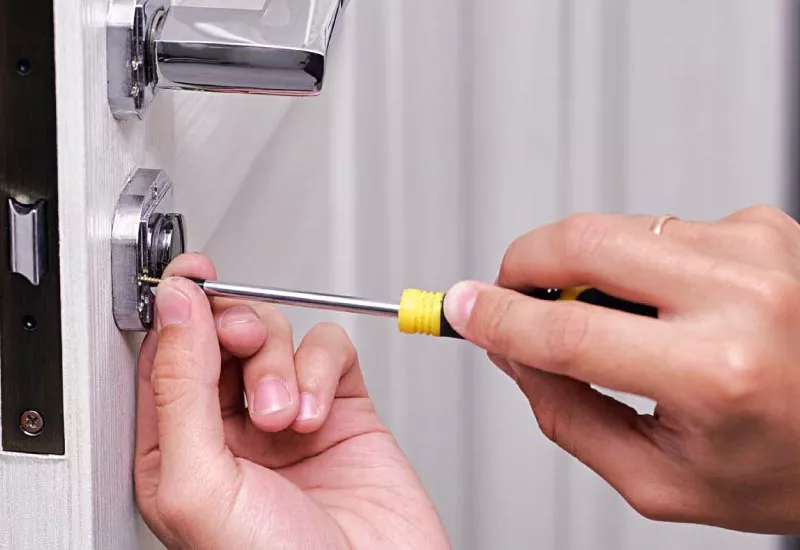
Quick Answer: Upgrade to Grade 1 or 2 deadbolts, install 3"+ strike plate screws, reinforce door frames, add security film to glass, and consider a video doorbell. Most break-ins happen through entry points—strengthening doors and windows is your best investment.
This guide covers practical, cost-effective ways to improve your home entry security, from basic lock upgrades to advanced reinforcement techniques.
The Importance of Your Entry Points
- Front doors account for roughly 34% of burglary entries
- Back and side doors are often less visible and less reinforced
- First-floor windows are another common entry point
- Garage doors and attached garages provide access to the home interior
Strengthening these areas creates significant deterrence—burglars prefer easy targets.
Step 1: Upgrade Your Deadbolts
Lock grades:
- Grade 3 — Basic residential (most builder-installed locks)
- Grade 2 — Residential heavy-duty (good for most homes)
- Grade 1 — Commercial-grade (highest security, most durable)
What to look for:
- Minimum 1" throw bolt (the part that extends into the frame)
- Pick-resistant and bump-resistant features
- Hardened steel construction
- Well-known brands: Schlage, Kwikset, Medeco, Baldwin
Step 2: Reinforce Your Strike Plates
The problem:
- Standard strike plates use 1/2" to 1" screws
- These screws only reach the door jamb (the trim), not the underlying structure
- A strong kick can split the jamb and defeat the lock
The solution:
- Replace with a heavy-duty strike plate (3" minimum length)
- Use 3" screws that reach through the jamb into the wall stud
- Consider a door reinforcement kit that protects the entire jamb
💡 Pro Tip: Replacing your strike plate screws with 3" screws is one of the cheapest and most effective security upgrades you can make. A a fair price box of screws can prevent a forced entry.
Step 3: Reinforce the Door Itself
Door material matters:
- Solid wood — Good security if in good condition
- Solid core — Engineered wood with solid interior; good balance
- Steel — Excellent security; common for exterior doors
- Hollow core — NOT suitable for exterior doors (easy to break through)
- Fiberglass — Good security and weather resistance
Door reinforcement options:
- Door reinforcement plates around the lock area
- Edge guards that reinforce the door edge where the lock sits
- Hinge reinforcement (hinges are another potential weak point)
Step 4: Address Glass Vulnerabilities
Solutions:
- Double-cylinder deadbolt — Requires a key from both sides (but be aware of fire safety concerns)
- Security film — Clear film on glass makes it much harder to break through
- Security grates or bars — Physical barrier over glass (interior decorative options exist)
- Replace panel — Some glass can be replaced with reinforced or laminated versions
⚠️ Fire Safety Note: Double-cylinder deadbolts (key required from inside) can be a hazard in a fire if you can't find the key. Never use them as your only exit. Keep a key nearby but out of reach from the door glass.
Step 5: Secure Sliding Doors
- Security bar in the track — Prevents the door from being forced open
- Pin or nail in the frame — Prevents lifting the door out of the track
- Security film on glass — Makes breaking through difficult
- Double-bolt sliding door lock — Adds a secondary locking point
- Alarm sensor — Alerts you if the door is breached
Step 6: Add Visibility and Deterrence
- Video doorbell — See who's at your door from anywhere; footage for evidence
- Motion-activated lights — Illuminates approach; deters prowlers
- Peephole or door viewer — See who's outside before opening
- Smart locks — Know when doors are unlocked; get alerts
- Security signage — Even alarm company signs provide deterrence
Frequently Asked Questions
What's the most cost-effective security upgrade?
Upgrading to 3" strike plate screws is the best value—it costs under a fair price and dramatically increases kick-in resistance. After that, upgrading to a Grade 1 or 2 deadbolt offers the best security per dollar.
Are smart locks as secure as regular deadbolts?
Quality smart locks with ANSI Grade 1 or 2 ratings provide equal physical security. The digital component adds convenience but ensure you use strong PINs and keep firmware updated.
What type of door is most secure?
Steel doors offer the best security for exterior applications. Solid wood and fiberglass are also good options. Avoid hollow-core doors on exterior entry points.
Is a chain lock adequate for security?
No. Chain locks allow you to partially open a door to talk to someone, but they offer almost no resistance to forced entry. They should never be your primary security.
How secure are sliding glass doors?
Standard sliding doors are often weak points. Improve security with a track bar, pin lock, security film, and potentially an alarm sensor. Some homeowners add a second sliding door lock.
What's a door reinforcement kit?
Door reinforcement kits are metal plates that strengthen the door edge, lock area, and jamb. They distribute the force of a kick across a larger area, making forced entry much harder.
Do I really need a peephole?
Yes. Opening the door to see who's there is a security risk. A peephole or video doorbell lets you see visitors without exposing yourself. Wide-angle peepholes and digital door viewers offer better visibility.
How important are hinges for security?
If your hinges are on the exterior of the door (pins accessible from outside), they're a vulnerability. Use hinge pins with set screws, security studs, or non-removable pins to prevent removal.
Can a locksmith assess my home security?
Yes. Many locksmiths offer security assessments where they evaluate all entry points, locks, and vulnerabilities. This is valuable when moving into a new home or after a break-in.
What about window security?
Ground-floor windows are vulnerable. Use window locks, security film, and consider window stops that limit how far they can open. Motion-sensing lights and thorny landscaping near windows also help.
Key Takeaways
- Most break-ins happen through doors—securing entry points has the biggest impact
- Upgrade deadbolts to ANSI Grade 1 or 2 for meaningful security
- Replace strike plate screws with 3" screws—the cheapest effective upgrade
- Address vulnerabilities: glass panels, hollow doors, sliding doors
- Add visibility: video doorbell, motion lights, peephole
- Consider a professional security assessment for a complete evaluation

About The Author
A1 Lock Express Team
Licensed mobile locksmith team serving Austin, TX with residential, commercial, automotive, and emergency service across the Greater Austin area. Texas Locksmith License #B12718701.
Learn more about A1 Lock ExpressRelated Locksmith Services
Need Locksmith Services in Austin?
Our expert team is available 24/7 for all your locksmith needs.
Get a Free Estimate